

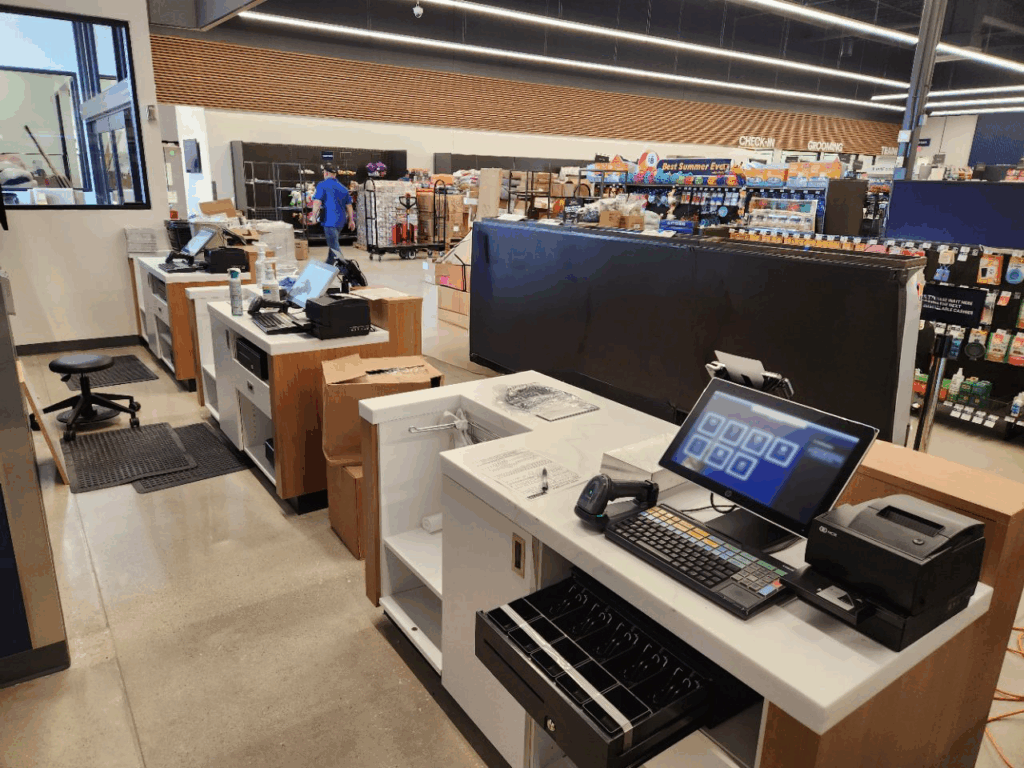
Growth is a sign of a healthy brand. New markets open, customer demand rises, and investment flows toward expansion. From the outside, scaling from 100 to 300—or even 400—locations looks like a success story.
But behind the scenes, something very different is happening inside IT.
As brands expand, the demands placed on internal technology teams grow exponentially faster than the teams themselves. The result is predictable and almost unavoidable: internal IT begins to crack under the pressure of a business that has outgrown its operating model and the business faces IT scalability challenge.
This isn’t a failure of the people. It’s the physics of rapid growth.
The Moment When You See IT Scalability Challenges
In discussions with growing brands, we consistently hear a version of the same story:
“A year ago, we could handle everything internally. Now we’re adding stores so fast that we can’t keep up.”
This happens for a few reasons.
-
- Trouble Ticket Volume Multiplies Overnight
One brand we spoke with recently was expanding from about 100 to nearly 400 locations—a nearly threefold increase. Yet their support desk still had four people.
At 100 locations, that model was manageable.
At 400, it became impossible.
More stores don’t just mean more users. They mean:
-
-
-
- More devices
- More service requests
- More after-hours support
- More outages to triage
- More escalations
-
-
Internal teams simply weren’t built for that kind of load.
-
- What Used to Be “Tribal Knowledge” Suddenly Becomes a Bottleneck
In smaller organizations, processes live in people’s heads. Everyone knows:
-
-
-
- Where equipment goes
- How stores are laid out
- Which configuration quirks matter
- What “good” looks like
-
-
But when a brand triples its footprint, new stores, new teams, and new regions start depending on instructions that were never written down.
In one engagement, a client’s internal lead, who had always executed installations himself, was suddenly responsible for guiding an external team. When specific expectations (like cable aesthetics and monitor placement) weren’t documented, misunderstandings emerged. Not because anyone was careless, but because the scale made informal communication impossible.
Growth exposes every undocumented assumption.
-
- New Store Openings Consume All Available Capacity

- New Store Openings Consume All Available Capacity
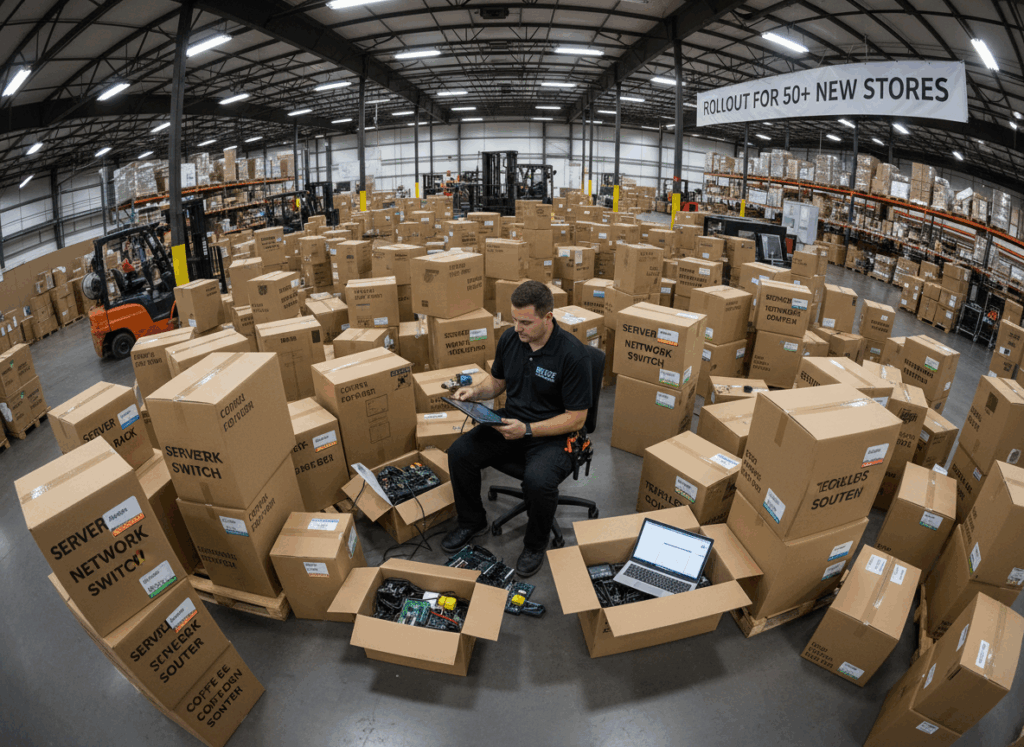
Store number 10 is easy. Store number 100 feels busy. Store number 300 becomes a pipeline of construction schedules, equipment staging, networking, testing, and cutovers that never stop.
In one example, a brand asked for assistance migrating a set of newly acquired users to Office 365. Initially they planned for the effort to last one day. Once they realized the volume of users, the need for first-day support, and the desire to make a positive impression during the acquisition, the request expanded into a two-week engagement.
What they really discovered was this:
Growth exposes how much internal work is sitting below the surface.
-
- Acquisitions Add Complexity—Not Just Locations
It’s one thing to grow by opening new stores. It’s another to grow by acquiring whole organizations. With acquisitions come:
-
-
-
- Mismatched infrastructure
- Inconsistent equipment standards
- Varying network maturity
- Unique support expectations
- Different ways of working
-
-
Brands often don’t realize how much operational weight comes with integrating new systems and supporting newly added teams—until IT starts falling behind. Scaling exposes the limitations of outdated networks—something we break down in detail in Why Retailers Should Upgrade Their Network Infrastructure.
The Soft Costs Nobody Sees (Until They Become Painful)
On paper, internal labor looks “free.” But growth reveals a long list of hidden costs that don’t appear on project budgets or P&Ls.
-
- Idle Time and Inefficient Travel
Internal teams often fly or drive to a site for new store openings or conversions. Once on-site, they may sit for hours or days waiting for:
-
-
-
- Construction delays
- Other vendors
- Permitting
- Equipment shipping
- Local approvals
-
-
But because the technician is already there, the downtime gets absorbed—not accounted for.
What looks like a “one-week task” may really be “four days of waiting and one day of work.”
-
- Lost Focus on Strategic Work
When internal IT is consumed by openings and conversions, everything else slows down, including:
-
-
-
- Security initiatives
- Network upgrades
- Staff training
- Backlog reduction
- System modernization
-
-
The business sees progress in expansion—but feels decline everywhere else.
-
- Burnout and Talent Drain
We’ve seen internal teams go from manageable workloads to 60–70 hour weeks as stores multiply. Good people leave, often right when the business needs them most.
-
- Delayed Openings = Delayed Revenue

- Delayed Openings = Delayed Revenue

When IT can’t support the expansion timeline, store openings slip. That directly affects:
-
-
-
- Revenue forecasts
- Capital return
- Operational momentum
-
-
The brand feels these delays long before leadership recognizes internal IT is overloaded. As pressure mounts during expansion, the gap between what internal IT is resourced for and what the business asks of them widens dramatically. CIO.com discusses this in its article, 7 reasons IT teams fail to exceed expectations.
Why the Model Breaks: The Operational Physics of Scale
Most internal IT teams are built for continuity, not rapid expansion.
Their job, historically, is to:
-
-
- Maintain existing systems
- Support existing stores
- Manage tickets
- Keep things running
-
But growth, especially rapid growth, requires:
-
-
- Parallel builds
- Geographic coverage
- Project management discipline
- Documentation
- Structured workflows
- Scalable deployment processes
-
These are not the same capabilities.
The model doesn’t break because internal teams lack talent.
It breaks because the growth curve outpaces the staffing curve.
How Forward-Thinking Brands Adapt
Here’s what the most successful scaling brands do once they recognize they’ve hit the operational breakpoint.
-
- Identify the Tipping Point Early
Before growth becomes painful, leaders look for:
-
-
-
- Slipping SLAs
- Increased outage impact
- Delayed store launches
- Staff fatigue
- Rising error rates
- Growing lists of “we’ll get to it later” work
-
-
These are signs of opportunities for improvement.
-
- Document the Playbooks
Teams write down what used to be instinct:
-
-
-
- Equipment standards
- Photos of “acceptable” setups
- Labeling conventions
- Change management rules
- Construction-readiness checklists
-
-
Documentation becomes the bridge between internal standards and scalable execution.
-
- Shift NSOs and Major Deployments to a Dedicated Partner
Once a brand crosses 150–200 stores, the economics change.
It becomes more efficient—and more predictable—for internal IT to act as the brain while a specialized team provides the boots on the ground.
This doesn’t remove responsibility from internal IT; it elevates it.
-
- Keep Internal IT Focused on the High-Value Work
- Keep Internal IT Focused on the High-Value Work

When internal teams no longer spend weeks on-site doing installs, they can focus on:
-
-
-
- Strategic improvements
- Architecture decisions
- Enterprise systems
- Analytics
- Security
- Process optimization
-
-
This is where they add the most value, and where growing brands need them most.
-
- Treat Early Outsourced Projects as Prototypes
The first deployment with a partner becomes the template. It’s normal that both sides refine processes, communication, and expectations. After that foundation is built, scale comes quickly.
Real-World Lessons From the Field
Here are a few stories that highlight what growth really looks like behind the scenes:
Growth Story #1: The Support Desk Overrun
A rapidly expanding brand tripled its footprint in under a year. Their four-person helpdesk, which once comfortably supported 130 stores, was suddenly receiving triple the daily ticket volume. They ultimately recognized that internal IT needed to shift to governance and oversight—not endless reactive support.
Growth Story #2: A One-Day Migration That Became Two Weeks
A company acquired 250 users and originally requested a single day of support. As leadership unpacked the onboarding expectations—ensuring a smooth, confident experience for new employees—they realized the workload was far larger. That’s when they discovered the difference between “we can make it work” and “we can make it right.”
Growth Story #3: Complexity Behind the Curtain
During an expansion into new regions, a brand found that mismatched infrastructure across acquired stores created a nonstop cycle of troubleshooting. Growth wasn’t just more locations, it was more variability, more exceptions, and more coordination than they had expected.
The Bottom Line: Growth Is Good—But Only If Operations Can Support It
When brands scale quickly, the first team to feel the pressure is almost always IT. The work becomes heavier, more spread out, more complex, and more strategic, and sometimes all at once.
The internal strain leaders see isn’t dysfunction.
It’s a natural sign that the business has outgrown a model designed for a smaller footprint.
Brands that thrive through this transition are the ones who:
-
-
- Recognize the signs early
- Document what matters
- Focus internal IT on strategy
- Bring in the right partners for execution
-
Growth should create momentum, not breakdowns. And with the right operational structure, it does.
If your organization is experiencing accelerated growth and IT scalability challenges, contact us to see how we might be able to help with boots on the ground.