

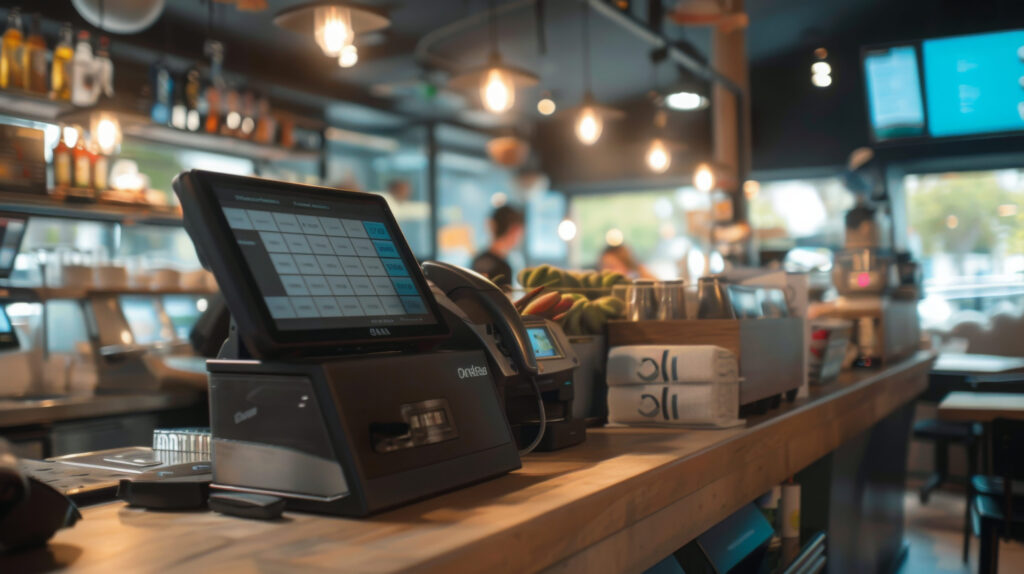
There’s a moment that happens on almost every technology deployment. The equipment is installed. The system is live. Everything checks out technically. And then something goes wrong anyway.
Not with the technology. With everything around it.
After years of managing deployments across restaurants, retail, and beyond, we’ve come to believe that the way our industry talks about technology rollouts is fundamentally incomplete. We evaluate vendors on their software. We compare hardware specs. We negotiate implementation timelines. What we rarely talk about, until something breaks, is the human workflow that has to function around all of it.
According to the 2026 State of Digital & Beyond report, 52% of restaurant brands say team workflow, training, and station efficiency are a top operational priority this year. That number doesn’t surprise me. What surprises me is how often the workflow conversation still gets treated as an afterthought. But it’s more challenging to figure out after the technology is already in place.
Here are three things we’ve learned the hard way about why that approach costs more than most operators realize.
What Happens When Your Vendor Changes the Rules Mid-Project?
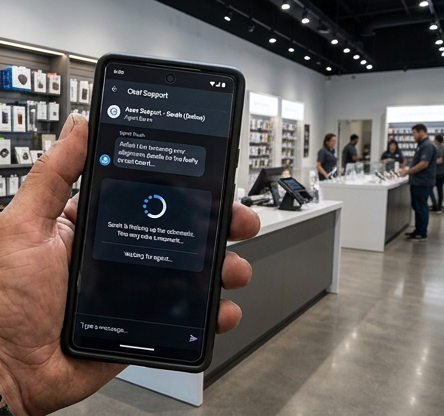
We were deep into a large multi-location security deployment when our technology partner changed their support model. Without much warning, live phone support during installations was replaced with chat-based and bot support. From their side, it probably looked like an efficiency improvement. From ours, it looked like a crisis.
Our technicians were on-site, system installed, ready to bring everything online, and now waiting hours for a chat queue to respond. Time that cost our client money. Time that eroded confidence in the project. Time that had nothing to do with the technology itself and everything to do with a workflow dependency nobody had mapped in advance.
We pushed back. We made the case that for complex, time-sensitive installs, live support wasn’t a preference, it was a requirement. And to their credit, our partner listened. They built an exception into their process for deployments like ours.
But the lesson stuck. Every deployment has workflow dependencies that live outside your direct control–vendor support models, partner processes, third-party response times. If you haven’t mapped those dependencies before you go live, you’ll find them when you can least afford to.
When Building the Process Is the Work
 We were brought in to help a client stand up a technology deployment process they didn’t have the internal infrastructure to build themselves. Over time we designed it, tested it, optimized it, and got it running smoothly. Eventually, they took it back in-house.
On the surface that might look like a loss. We’d done ourselves out of a job. But we’ve come to see it differently.
What we built for that client didn’t disappear when they walked away with it. It sharpened our thinking. It gave us a blueprint we could apply, and improve upon, for the next client facing a similar challenge. Every process we build, whether it stays with us or transfers to the client, adds another tool to how we approach the next deployment.
The deeper lesson is this: the process is often more valuable than the technology it supports. A well-designed deployment workflow reduces cost, compresses timelines, and removes the ambiguity that turns routine installs into expensive problems. Most operators underinvest in building that workflow because it doesn’t show up on a hardware quote. But it shows up everywhere else.
When Nobody Mapped the Handoffs Before the First Hammer Swung
In another situation, a client relationship hit a rough patch. Not because the technology failed. Not because our team underperformed. But because nobody had ever sat down with the construction schedule and asked a simple question: where does our work fit relative to everything else happening on that site?
Technology deployments in restaurant and retail environments don’t happen in a vacuum. They happen alongside construction crews, equipment installers, millwork teams, and a half-dozen other trades, all operating on their own timelines with their own dependencies. When those timelines aren’t coordinated, technology ends up getting squeezed into whatever window is left. And that window is almost never the right one.
What turned that client relationship around was a single conversation. We got on a call with their construction schedule in front of us and walked through it together. We identified our prerequisites–what had to be done before we could show up and do our job effectively. We mapped the handoffs. We told them where to slot us and what we needed from the other teams to hit that window cleanly.
That client now sends us the construction schedule before they break ground. The technology hasn’t changed. The workflow around it has. And that has made all the difference.
The Real Deployment Problem
The 2026 industry data points to something operators already feel intuitively. More than half are prioritizing workflow, training, and operational efficiency this year, not because their technology isn’t capable, but because the gap between what their systems can do and what their operations can actually deliver has become impossible to ignore.
Technology deployments fail at the seams. Between the vendor’s process and yours. Between your team’s timeline and the construction crew’s. Between the way a system was designed to be supported and the reality of a live deployment under pressure.
Closing those gaps doesn’t require better hardware or more sophisticated software. It requires someone who is willing to map the workflow before the truck rolls and own what happens in between.
That’s not the glamorous part of this work. But in my experience, it’s the part that determines whether a deployment succeeds or fails.