


At the 2026 Secure Summit, Solink unveiled an AI roadmap that goes well beyond video surveillance and positions its platform as an autonomous intelligence layer for physical business operations.
AI video analytics for retail is the next phase. For most of its history, Solink has been known as a cloud-based video management system–a smarter way to store, search, and manage security footage across multi-location businesses. Over the past two years, Solink has been quietly building one of the more ambitious AI stacks in the physical security space, and the 2026 Secure Summit in Los Angeles served as the platform’s most significant public showcase yet.
What emerged from those sessions is a picture of a company that has made a fundamental strategic shift: from surveillance tool to AI-driven video intelligence platform. The distinction matters. Surveillance captures. Intelligence acts.
The Foundation: Unifying Video, Data, and Operations
Solink’s AI strategy is built on a core architectural advantage: its platform connects not just cameras, but also point-of-sale systems, access control, alarm systems, and other operational data sources into a single unified view. This video-plus-data architecture is what separates Solink’s approach from traditional video analytics, where the camera is the only input.
The practical implication is context. When a camera feed alone shows a transaction, it’s just a transaction. When that same feed is correlated with POS data showing a “no sale” event with no customer present, it becomes a flag worth investigating. That cross-modal awareness where understanding what is happening in video in the context of what the business data says should be happening is the technical foundation everything else is built on.
Solink’s philosophy is that data needs to be accessible, intuitive, and actionable. That framework shapes every product decision, from how alerts are surfaced to how AI agents are deployed.
The AI Suite: Four Capabilities, One Platform
Solink’s AI product line currently comprises four distinct tools, each targeting a different operational use case:
AI Video Search
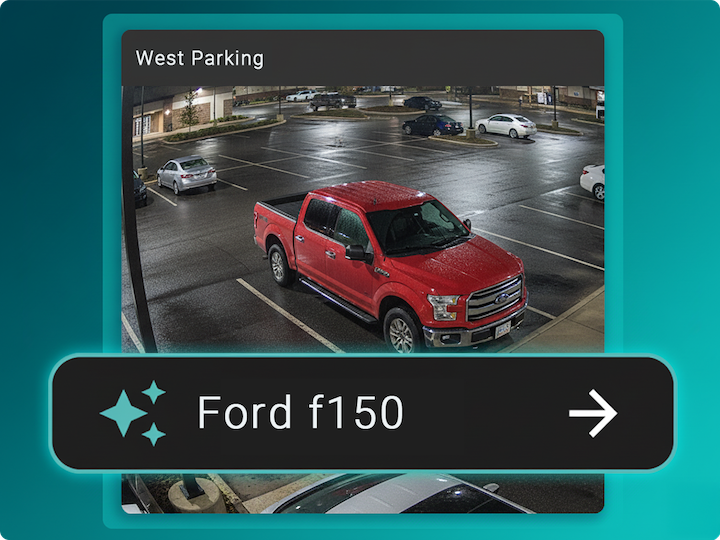
Rather than manually scrubbing through hours of footage, users can now search by natural language descriptors like clothing color, vehicle make and model, license plate, or other identifiable objects. The system finds relevant clips and describes what it sees, dramatically cutting the time required for incident investigations. This would significantly reduce investigation time.
Sidekick AI Assistant
Sidekick is Solink’s generative AI assistant. It’s the layer through which much of the agentic functionality is delivered. Users interact with Sidekick using plain-language prompts or by pasting in company SOPs and brand standards; Sidekick refines those inputs automatically and turns them into scheduled camera audits. Common use cases include checking whether shelves are stocked, verifying employee coverage at key stations, flagging safety hazards like blocked exits or wet floors, and confirming that stores opened or closed on time. Solink reports that Sidekick can reduce physical site visits by 62% and enable audit frequency to increase by as much as 13x.
Vision Analytics
This is Solink’s spatial intelligence layer, covering two specific capabilities: traffic counting (line-cross detection) and dwell-time analysis (zone tracking). Users draw virtual lines or zones directly on any camera feed. The system then tracks everything that crosses those boundaries, people, vehicles, anything in the field of view, and produces count and time data that can be visualized as trend graphs.
One real-world example that surfaced during summit sessions: Take Five Oil Change, a chain with roughly 1,300 locations, used this to diagnose an apparent “drive-off” problem. After drawing a detection line behind their service queue, they discovered the system was miscounting. Cars backing up to reposition into a different bay were being flagged as departures. Solink built in a timer-based filter: if a vehicle recrosses the threshold before the timer expires, it doesn’t count as a drive-off. That kind of customer-specific iteration is central to how Solink develops the product.
The same technology applies to foot traffic in retail stores, customer engagement in service areas, queue monitoring, and any other scenario where movement and timing data has operational value.
The Big Announcement: AI Agents as Digital Teammates
The headline announcement at the 2026 Secure Summit was Solink AI Agents — a set of autonomous, role-based AI systems formally introduced on February 18, 2026. This represents a meaningful step up from the assistive AI of previous releases. Rather than flagging events for human review, agents are designed to reason, decide, and act.
Each agent is given a specific role, a set of permissions, and domain-specific training that allows it to understand operational context, not just pattern-match on pixels. Solink describes them as “digital teammates”: systems that handle high-volume, repeatable tasks so that human teams can focus on work that actually requires human judgment.
At launch, two agent templates are available:
-
-
- Perimeter Security Guard Agent — Monitors perimeter cameras continuously, identifies threats or unauthorized activity, and can trigger automated alerts and response workflows without waiting for a human operator to notice.
- Loss Prevention Agent — Analyzes transactions alongside video to detect anomalies: discounts with no corresponding customer, potential voids, or patterns consistent with internal theft. It processes both video language models and structured POS data simultaneously to reach conclusions about intent, not just activity.
-
Additional agents are on the roadmap. Summit sessions referenced a Store Readiness Agent, which scans video stills to catch operational lapses a district manager would flag on a walk-through (overflowing bins, unstocked shelves, uncleaned tables, blocked walkways) and a Checkout Monitoring Agent, which will automate the correlation of POS transaction data with video to identify when register activity doesn’t match what the camera sees.
From a deployment standpoint, the agents run directly on edge devices such as network video recorders—an approach similar to how edge computing in restaurant technology processes data locally for faster insights. Updates are pushed over the air. The system is also designed for continuous learning, adapting over time to the specific patterns and environment of each deployment.
Integrations: 320 Connections and Growing
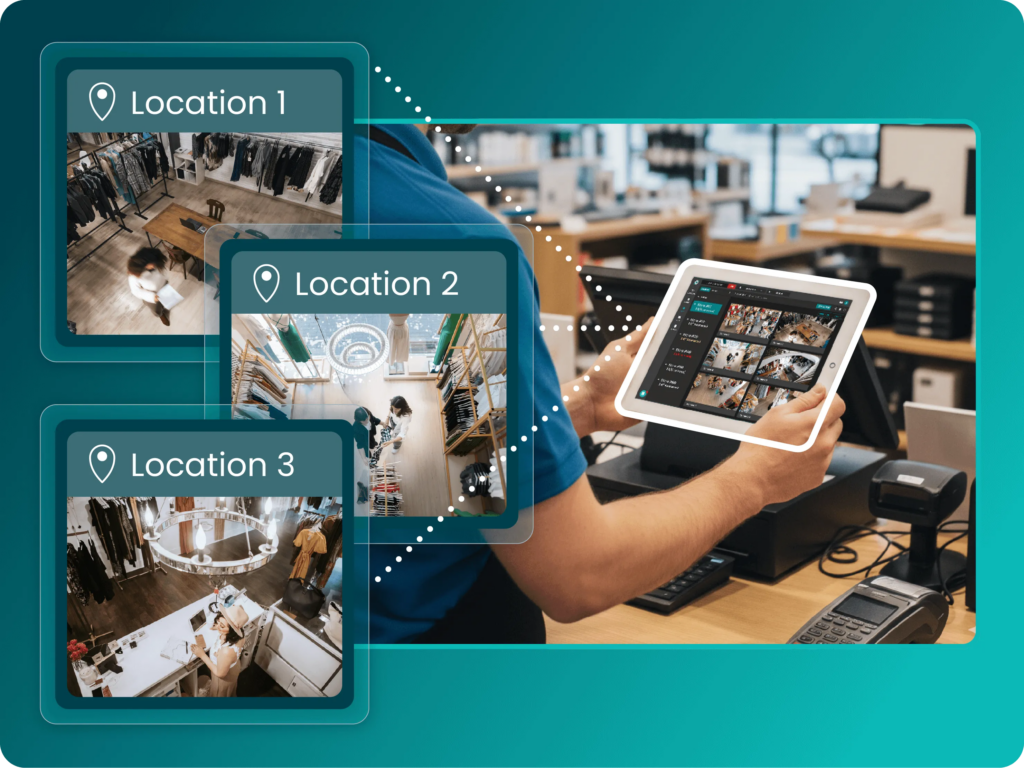
Alongside the AI capabilities, Solink has been aggressively expanding its integration ecosystem. As of 2026, the platform supports 320 data integrations, adding 55 new connections in 2025 alone. These integrations span POS systems, inventory management, smart climate control, speed-of-service tools, and automotive service systems, among others.
The integration philosophy is currently outbound-first: Solink pushes its video intelligence and analytics data into customer tools and business systems, rather than building deep two-way integrations with external AI platforms. Clients can then act on that data within whatever operational systems they already use. This approach keeps Solink focused on what it does best which is extracting meaning from video while giving clients flexibility in how they consume that intelligence downstream.
Broader platform integration (allowing external AI tools to connect into Solink’s data layer) appears to be a second phase, once the foundation of the AI agents and analytics capabilities is fully matured.
What to Watch
Solink’s 2026 roadmap represents a company at an inflection point. The core platform is proven — 30,000+ customers, 99.5% uptime, a SOC 2 Type II certification — and the AI layer is now substantial enough that it changes the value proposition entirely. The open questions are about depth and reach: how quickly the agent library expands, whether third-party AI integration follows, and how enterprise clients respond to autonomous systems taking action on their behalf rather than merely surfacing alerts for review.
For organizations in retail, restaurants, hospitality, and any other multi-location environment where video is already deployed, the developments at Solink are worth tracking closely. The cameras are already installed. The question is how much intelligence you want running through them.