

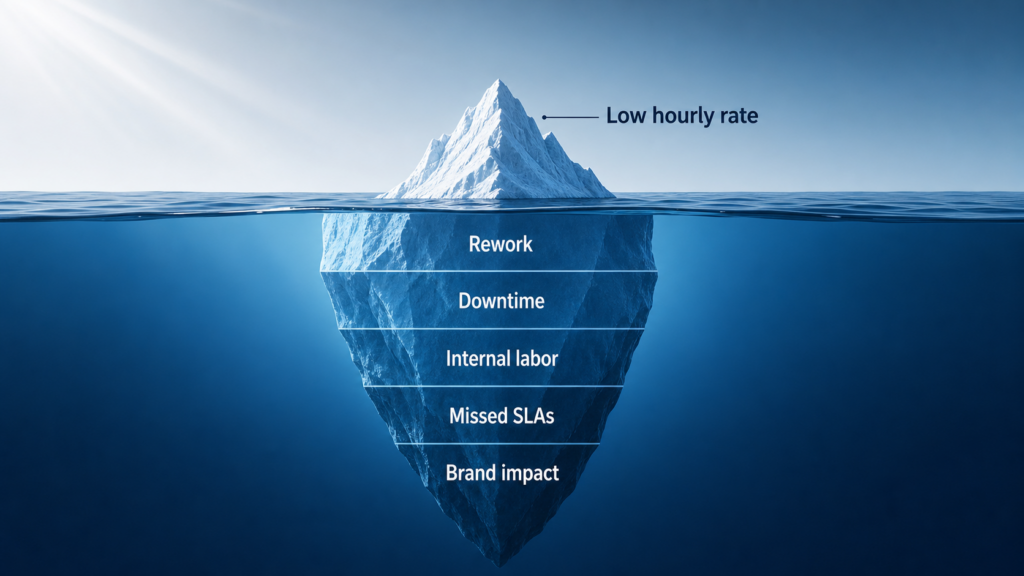
Overview: When you choose a field service provider, hourly rate is the worst metric to compare them on. A low rate is achieved by cutting the work that happens around the on-site visit — technician vetting, pre-call preparation, live support, and validation — not by cutting margin. When that work is missing, a single failed visit can cost 25 times the savings, plus brand damage that never shows up on an invoice. The five questions at the end of this article reveal more about a provider than any rate ever could.
Key takeaways
-
-
- Hourly rate is the worst single metric for comparing field service providers. Two providers at very different rates are usually selling different products.
- Low rates are achieved by cutting work that happens around the visit — vetting, prep, support, and validation — not by cutting margin.
- The cost of a failed on-site visit cascades into rework, downtime, internal time, staff trust, opportunity cost, and brand damage.
- A $200 hourly saving can produce $5,000 of downstream cost on a single site, and that math multiplies across location portfolios.
- Five questions reveal what an hourly rate hides: technician sourcing, pre-call prep, on-site support, validation, and failure ownership.
- The right question is not “which quote is cheapest?” It’s “which of these quotes is for the service I actually need?”
-
Why are field service quotes so different in price?
Three quotes are sitting on your desk. Same scope of work. Same number of sites. The lowest is roughly half the highest — and you have to choose a field service provider by Friday.
The math looks obvious. It usually isn’t.
Field service providers can quote the same scope at $50 an hour and $150 an hour and be selling fundamentally different products. The hourly rate tells you what a body costs per hour on-site. It tells you almost nothing about whether the work will succeed.
The number on the quote is the easiest thing to compare. That’s exactly why it’s the wrong thing to lead with.
What does an hourly rate actually tell you?
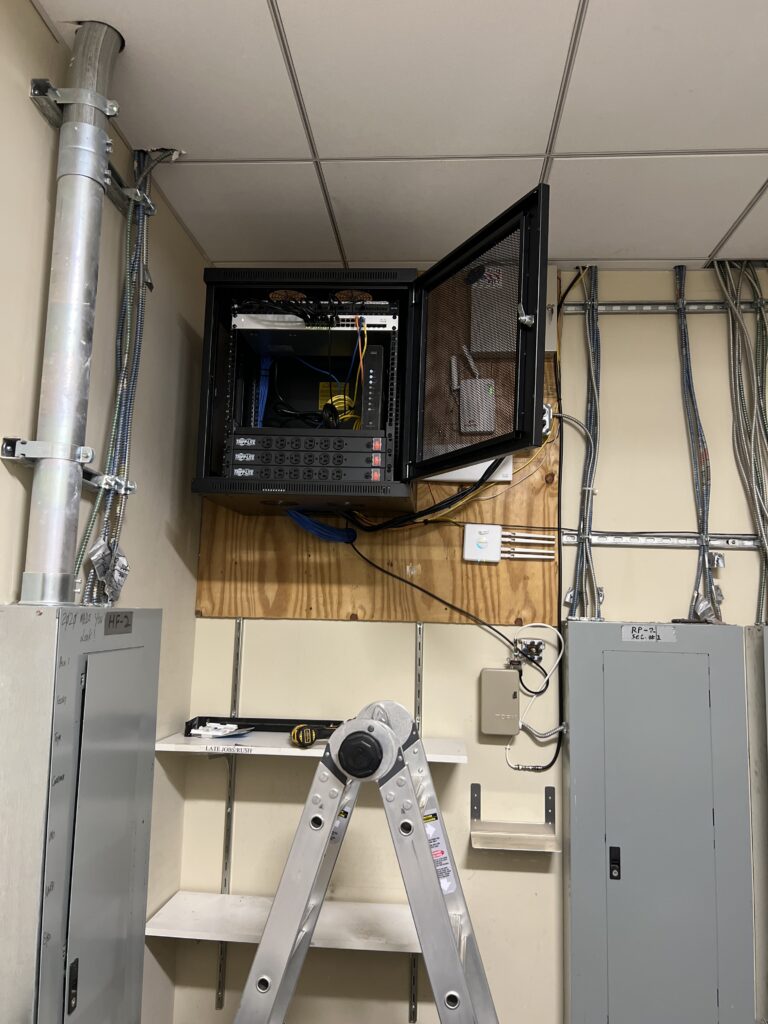
Very little of what matters. A low rate does not tell you:
-
-
- Whether the technician has been vetted or has done this kind of work before
- Whether they’ll arrive on-site with the right tools and parts
- Whether they can interpret a scope of work that runs longer than a paragraph
- Whether anyone is on the phone when the install doesn’t match the diagram
- Whether the work will pass validation the first time, or the third
- Whether anyone owns the outcome after the technician leaves
-
Two providers can offer the same scope at vastly different rates because the rate is only a small fraction of what determines whether the work succeeds.
What does a low-cost field service provider cut to hit that rate?
To hit a low hourly rate, a provider has to cut something. In nearly every case, the cuts come from the work that happens around the on-site visit:
-
-
- Technician vetting. At the lowest tier, whoever signed up in the marketplace gets the job. No certification check, no track record review, no confirmation the tech has done this kind of work before.
- Pre-call preparation. The technician arrives without context, without having reviewed the site, without knowing what the client’s environment looks like.
- On-site support. When something doesn’t match the plan, the technician is improvising alone. No one to call, no escalation path.
- Validation. A photo and a checkbox replace actual verification that the system works.
- Accountability. When something breaks the next day, no one owns the outcome.
-
The buyer thinks they’re comparing service tiers. They’re actually comparing a complete service on one side and a body with a screwdriver on the other.
What are the hidden costs of a failed on-site IT visit?
A failed install or botched cutover is rarely a one-time loss equal to the cost of the visit. The damage cascades across at least six categories:
-
-
- Rework cost. A return visit or possibly even a second vendor charges full price to fix what the first one didn’t finish.
- Site downtime. Point-of-sale systems offline, network down, staff standing around, customers walking out.
- Internal diagnostic time. Senior engineers and managers pulled into figuring out what the cheap technician actually did, or didn’t do.
- Staff trust at the location. When site managers stop believing IT will deliver, every future visit gets harder.
- Opportunity cost. The people firefighting were supposed to be working on something else.
- Brand and reputation damage. Every customer who experiences a broken system, every store manager who reports back that the technician “had no idea what he was doing,” every franchisee who starts questioning headquarters — that’s reputation cost compounding quietly, and it doesn’t get repaired on the next service visit.
-
The math is consistent across the industry: a $200 saving on an hourly rate can easily produce $5,000 of downstream cost on a single site. Multiply that across fifty or five hundred locations, and the “savings” don’t disappear. They reverse.
What are you actually paying for when you choose a higher-rate field service provider?
A higher hourly rate is not the cost of a more expensive technician. It’s the cost of the infrastructure that makes any technician successful on your site:
-
-
- A vetted pool of technicians the provider has dispatched before and knows can handle the work
- A pre-engagement briefing so the tech arrives with context, not curiosity
- A live support line during the visit, staffed by someone who can answer a question in real time
- Defined validation steps before the ticket closes
- Documentation handed back to the client
- A coordination team managing scheduling, reschedules, and site confirmations
- A provider that owns the outcome, not just the appointment
-
The technician is roughly the same person at every price tier. What changes is everything around them.
What questions should you ask before choosing a field service provider?
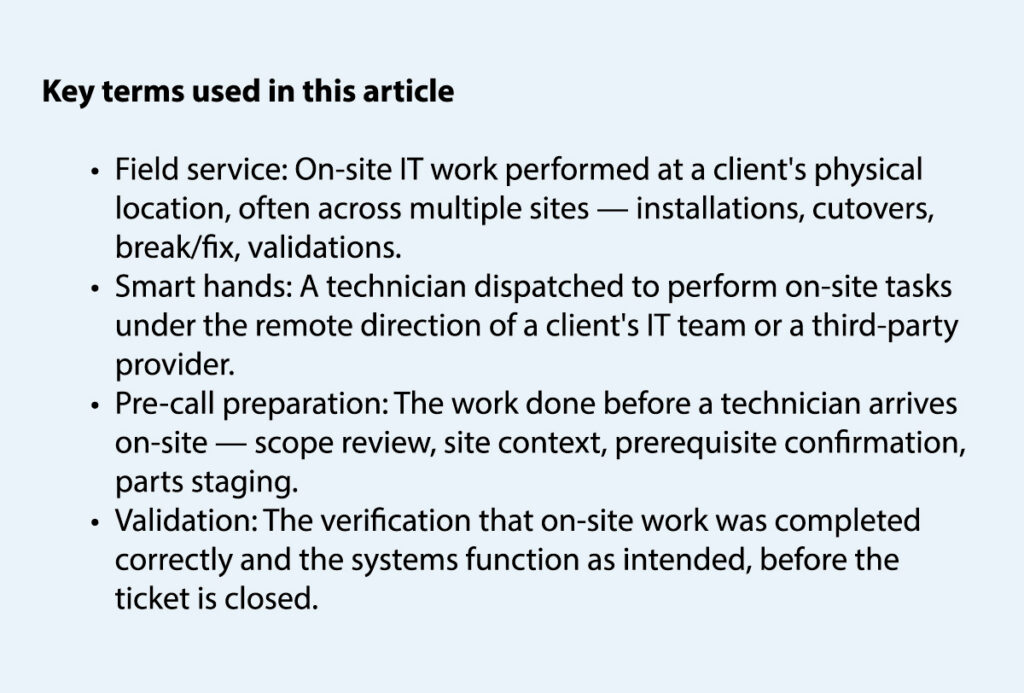
When comparing field service quotes, set the rates aside for ten minutes and ask each provider these five questions:
-
-
- How do you source and vet the technician who will be on my site?
- What does pre-call preparation look like for this work order?
- Who does the technician call when something on-site doesn’t match the plan?
- How do you verify the work was completed correctly before closing the ticket?
- What happens if the visit fails — who pays for the return trip?
-
No single answer disqualifies a provider. Taken together, the answers explain the rate. A provider charging a low hourly rate usually cannot answer these questions in any depth, because the rate doesn’t allow for the work the answers describe. A provider charging $250 an hour should be able to answer them without thinking.
That’s where the real comparison lives.
When you choose a field service provider, it shouldn’t come down to who quoted the lowest hourly rate. If you’re evaluating providers for an upcoming rollout, contact Worldlink to review your scope and see if we’re the right fit.