


Successful outsourcing in restaurant technology isn’t just about choosing the right partner—it’s about preparing your internal IT team to work alongside them.
Restaurant IT deployment challenges happen every day. Imagine your restaurant brand is preparing for a major POS upgrade.
Dozens of locations need new hardware installed. Networks need to be validated. Kitchen display systems must integrate with the new platform. Stores can’t afford downtime, especially during peak service hours.
Your internal IT team already has a full plate supporting stores, troubleshooting outages, coordinating partners, and managing daily operations. Adding a large rollout on top of that workload simply isn’t realistic.
So leadership decides to bring in outside support.
On paper, the decision makes perfect sense.
But when the project begins, progress slows. Communication breaks down. Store knowledge isn’t flowing between teams. Internal staff seem disengaged.
Suddenly the partner appears to be the problem.
The Key Insight
In restaurant technology rollouts, outsourcing rarely fails because of the partner. It fails because internal teams weren’t prepared for how the partnership would work.
But in many cases, the real issue isn’t the partner.
It’s the internal team.
When outsourcing struggles, restaurant IT deployment challenges are rarely technical capability. More often, the organization hasn’t prepared the people who will be working alongside that partner.
Outsourcing isn’t just a sourcing decision. In many organizations, it’s a meaningful operational and cultural shift.
And if that shift isn’t managed carefully, even the most capable external partner will struggle to succeed.
The Hidden Risk in Outsourcing: Internal Resistance
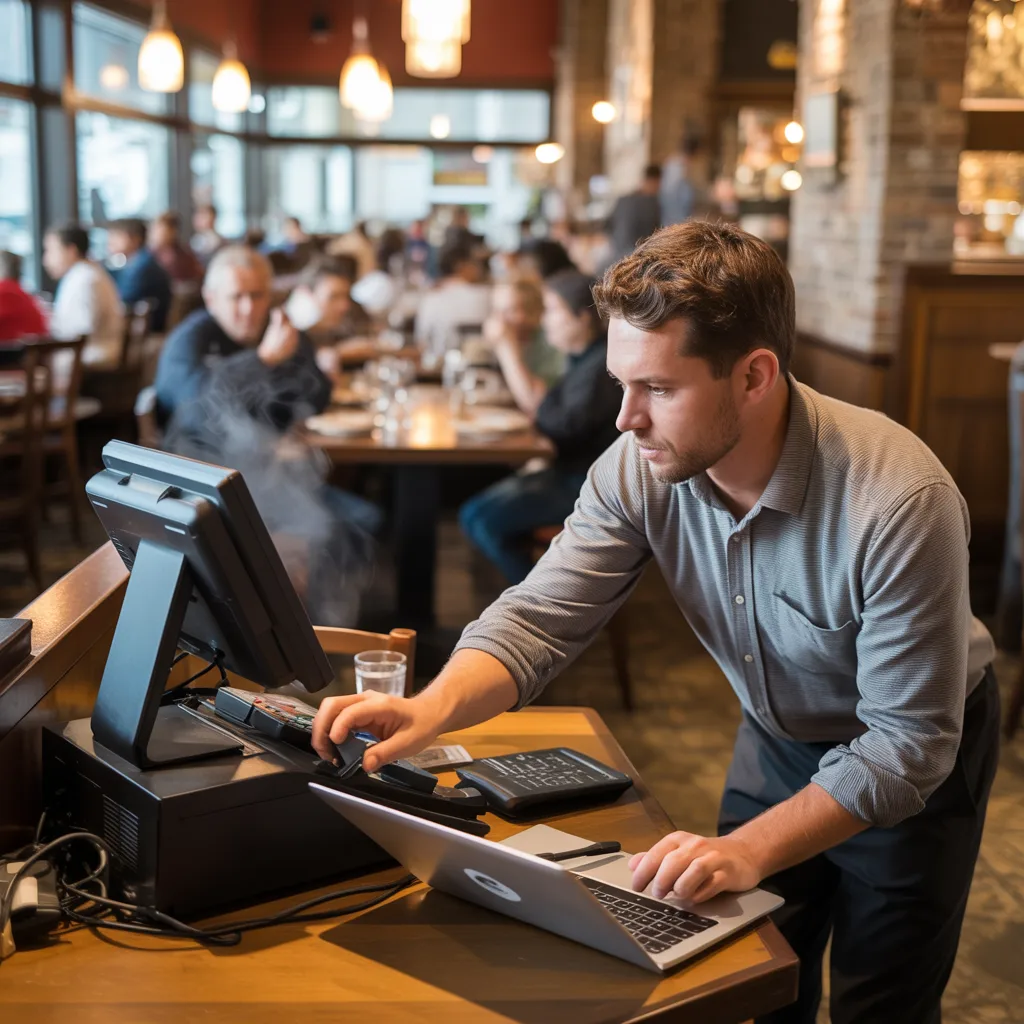 When outsourcing initiatives fall short, organizations often focus first on partner performance.
But in many cases, the real challenge lies inside the company.
Restaurant IT teams are deeply connected to the systems they support. They’ve spent years building processes, troubleshooting issues, and keeping stores running during peak hours. When an external partner enters the picture, it can easily be interpreted as a signal that leadership no longer trusts the internal team.
Employees may worry about job security. Others may assume outside technicians are being brought in to replace them.
Without clear communication from leadership, people naturally fill in the blanks themselves—and those assumptions are rarely positive.
This resistance rarely appears as open opposition. More often it shows up in subtle ways:
-
-
- Store knowledge isn’t shared quickly
- Collaboration becomes minimal
- External teams struggle to access systems or historical context
- Internal staff disengage from the project
-
From leadership’s perspective, it may appear that the partner is underperforming. In reality, the partner may simply be operating without the internal support needed to succeed.
Outsourcing works best when the internal team sees the partner as a resource, not a replacement.
The Real Goal of Outsourcing: Supporting Restaurant IT Teams
One of the most important messages leadership must communicate is that outsourcing is designed to support internal teams, not replace them.
Most restaurant IT leaders face the same challenge: the technology footprint inside restaurants continues to grow. Many brands begin exploring outsourcing as a way to manage that complexity—but successful restaurant IT outsourcing usually starts with clearly defining the problem first.
Modern restaurants rely on a complex ecosystem that includes POS platforms, kitchen display systems, handheld devices, digital ordering platforms, loyalty systems, payment infrastructure, and increasingly sophisticated networking environments.
Supporting these systems across dozens of locations requires operational capacity that many internal teams simply don’t have.
External partners can help absorb some of that operational workload by handling store rollouts, field service visits, device replacements, or infrastructure upgrades.
When outsourcing is positioned correctly, it allows internal teams to focus on the areas where they create the most value:
-
-
- Technology strategy
- Architecture decisions
- Partner management
- Aligning technology with restaurant operations
-
In many organizations, outsourcing doesn’t reduce the importance of internal IT teams, it allows them to operate more strategically.
But that shift only happens when leadership communicates the purpose clearly.
Preparing Your Team Before Outsourcing Begins
Restaurant organizations that succeed with outsourcing typically invest as much effort preparing their teams as they do selecting the partner.
The goal isn’t simply to introduce a partner. It’s to create alignment between internal teams and external resources.
Several steps can make that transition significantly smoother.
Communicate the “Why” Early
Leadership should communicate early and clearly about why outsourcing is being considered. Is the goal to support a large POS rollout? Improve field service coverage across hundreds of locations? Free internal teams to focus on strategic initiatives?
Clarity helps reduce speculation and ensures employees understand the broader objective.
Define Roles and Responsibilities Clearly
One of the most common sources of friction in outsourced restaurant technology projects is confusion about ownership.
Internal teams may assume the partner is responsible for certain tasks, while the partner expects internal support. When responsibilities overlap or fall through the cracks, projects slow down quickly.
Before outsourcing begins, organizations should clearly define:
-
-
- What the partner will handle in the field
- What remains the responsibility of internal IT
- Where collaboration will be required
-
Clear boundaries prevent frustration and help both teams operate effectively.
Involve Internal IT Teams in the Process
Another common mistake is treating outsourcing as a purely executive decision.
Restaurant IT leaders and engineers often have deep operational insight into how stores actually function. Their perspective can help identify potential issues before a rollout begins.
Involving key team members in planning discussions not only improves the execution plan, it also creates a sense of ownership in the outcome.
When employees feel included in the decision, they are far more likely to support the partnership.
Position the Partner as an Extension of the Team
 Outsourcing relationships work best when the external partner operates as a true extension of the restaurant’s technology team.
That mindset should be reinforced early.
Introduce the partner in a way that emphasizes collaboration and shared goals. Encourage open communication between internal engineers and field technicians.
When the relationship feels like teamwork rather than handoff, cooperation improves dramatically.
Establish Clear Collaboration Expectations
Even with strong communication, collaboration doesn’t happen automatically.
Restaurant organizations should define how internal teams and outside partners will work together and how information will be shared, how store issues will be escalated, and how success will be measured.
These structures help prevent misunderstandings and ensure projects move forward smoothly.
Outsourcing Is Ultimately About Alignment
Restaurant brands often approach outsourcing primarily as a procurement decision where they’re focused on pricing, service agreements, and vendor capabilities.
But the real determinant of success is alignment.
Alignment between leadership and internal IT teams. Alignment between internal staff and external partners. Alignment around shared goals and responsibilities.
Organizations that invest time building this alignment often see the greatest benefits: smoother store rollouts, faster issue resolution, and internal teams that can focus on improving the restaurant experience rather than constantly responding to operational issues.
Those who skip this preparation often encounter friction that no contract can solve.
The Bottom Line
Outsourcing restaurant IT support isn’t just about bringing in outside expertise.
It’s about creating a partnership that strengthens the entire technology organization.
When internal teams understand the purpose behind outsourcing and see how it supports their role rather than threatens it, external partnerships become far more effective.
For restaurant brands managing increasingly complex technology environments, that preparation can make the difference between outsourcing that simply fills gaps and outsourcing that truly improves operations.